🚀 Built by a solo developer.
"This is a great way to jump to a particular window without having to hunt it down with the mouse."
— Lifehacker
"I wish I had found this app much earlier, because it would have saved me a lot of frustration in figuring out which of the 10 open windows in Safari has the tab I'm looking for."
— Medium
"I can see what's going on with the app much better, which helps my workflow."
— GroovyPost
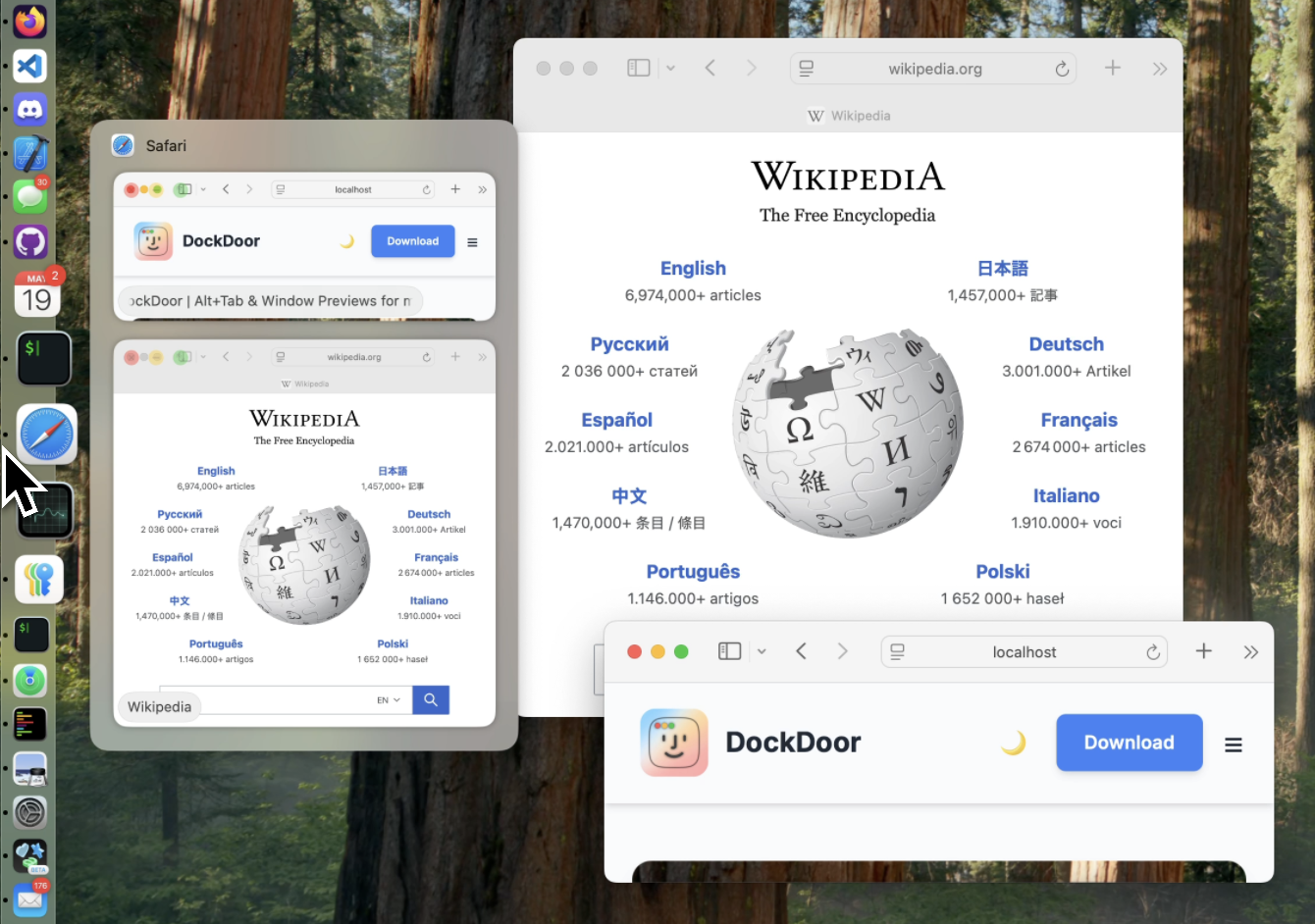
"If you want an alternative to AltTab that includes previews of your apps when you hover over their icon in the dock, try DockDoor."
— Yahoo
"The app allows users to manage and interact with application windows on their desktops. It emphasizes ease of use and seamless integration with the macOS environment."
— Mac Treasure
"In Windows, when you hover over an app on the taskbar, the operating system shows you the open windows for that app, a useful feature missing in macOS until now with the introduction of the free menu bar app DockDoor."
— AppAddict
"It's free, open-source, and honestly, Apple should have bought this developer out by now."
— Medium
"This is a great way to jump to a particular window without having to hunt it down with the mouse." Clinical ethology—the study of animal behavior in a
— Lifehacker
"I wish I had found this app much earlier, because it would have saved me a lot of frustration in figuring out which of the 10 open windows in Safari has the tab I'm looking for."
— Medium
"I can see what's going on with the app much better, which helps my workflow."
— GroovyPost
"If you want an alternative to AltTab that includes previews of your apps when you hover over their icon in the dock, try DockDoor."
— Yahoo
"The app allows users to manage and interact with application windows on their desktops. It emphasizes ease of use and seamless integration with the macOS environment."
— Mac Treasure
"In Windows, when you hover over an app on the taskbar, the operating system shows you the open windows for that app, a useful feature missing in macOS until now with the introduction of the free menu bar app DockDoor."
— AppAddict
"It's free, open-source, and honestly, Apple should have bought this developer out by now."
— Medium
Your data stays on your Mac. Always.
No cloud, no servers, no external connections. Even debug logs stay on your Mac.
We don't collect analytics, usage data, or personal information. Not even crash reports.
Full transparency. Review our code, contribute, help with translations, or build it yourself.
Transform your Mac workflow with intuitive window management
Hover over any dock icon to see live previews of all windows. Click to switch or manage without changing focus.
Press Option+Tab for Windows-style window switching with live previews. Fast, familiar, and efficient.
Enhance the native macOS Command+Tab experience with richer previews and smoother navigation.
Customize DockDoor to match your workflow preferences
Personalize your dock preview experience with different layout options. Adjust spacing, sizing, and arrangement to suit your needs.
Choose from different visual styles and layouts for your window switcher. Customize the appearance to match your workflow and visual preferences.
Customize every aspect of DockDoor to fit your needs
Fine-tune dock hover behavior, preview thresholds, and per-feature toggles for dock interactions.
Configure Alt+Tab behavior, sorting, layout direction, and compact mode thresholds.
Replace the native Cmd+Tab with DockDoor's enhanced overlay, with its own appearance and behavior settings.
Customize the look and feel of previews, colors, window sizing, and visual effects.
Configure trackpad gestures, keyboard shortcuts, and window positioning actions.
Choose which apps show in previews, and configure media controls and calendar widgets on dock hover.
Window controls exactly where you need them
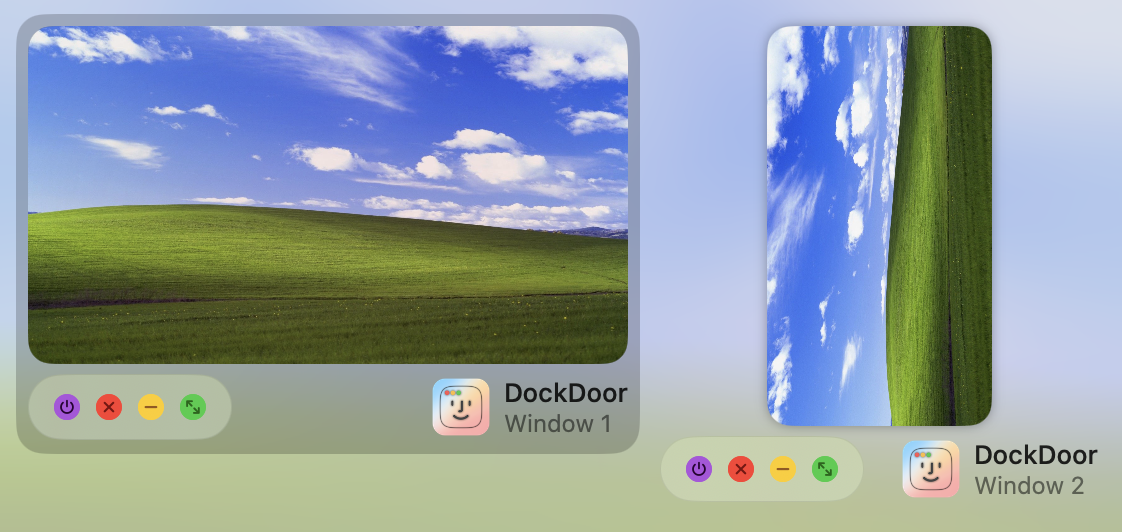
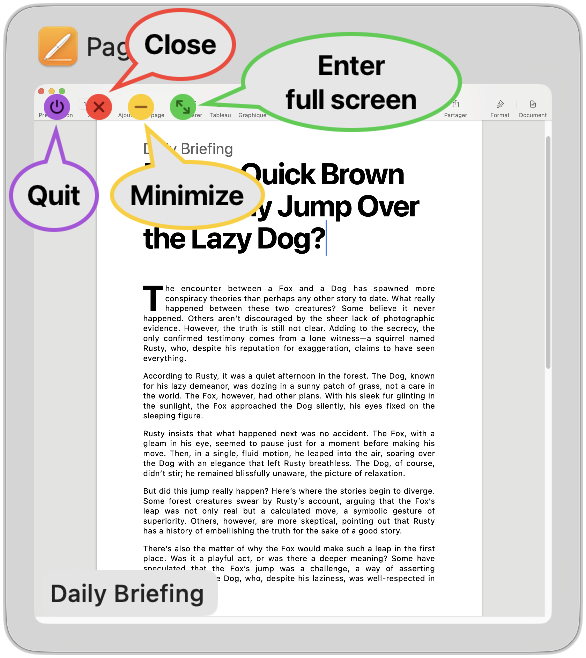
DockDoor adds intuitive window controls to each preview. Close, minimize, or maximize windows with just one click, without having to switch focus.
Navigate and control windows entirely with your keyboard
Tab forward, Shift backward, or use arrow keys to navigate through windows
Select, close, quit, or minimize windows
Open Window Switcher and navigate without touching your mouse
Clinical ethology—the study of animal behavior in a veterinary context—has shifted from a niche interest to a core component of general practice. This change is driven by the understanding that a "healthy" animal is not merely one free of disease, but one that is mentally stimulated and emotionally stable.
The synergy between animal behavior and veterinary science represents a profound shift toward truly comprehensive veterinary medicine. By viewing the animal as a complete entity—where mental wellness directly impacts physical pathology—veterinary professionals can provide more accurate diagnoses, safer treatments, and a drastically higher quality of life for the animals in their care.
Up to 80% of behavioral cases (like sudden aggression) are linked to underlying physical pain or medical issues.
Drawing from human psychology, veterinary hospitals are beginning to adopt "trauma-informed" protocols for rescue animals from hoarding or abuse situations. This involves longer acclimation periods, choice-based handling, and minimizing aversive stimuli (like loud clippers) to prevent re-traumatization.
The rescue process is never easy, but the Zooskool Strayx team makes it look seamless. With their extensive experience and expertise, they are able to assess each situation quickly and provide the necessary care and attention. From initial intake and medical evaluation to rehabilitation and socialization, every step of the process is carefully planned and executed.
A sudden onset of defensive aggression in a normally gentle dog often points to localized pain, such as osteoarthritis, dental disease, or spinal discomfort.
Evening: The Counting Word traveled by pawprint and whisper: tonight the pack would do something they had not done before. They arranged at the edge of Zooskool beneath the lamplight that hummed like a contented fridge. One by one they performed small miracles:
A change in behavior is often the very first sign of sickness. For example, a normally affectionate cat that suddenly hides may be experiencing underlying kidney pain or arthritis.
Clinical ethology—the study of animal behavior in a veterinary context—has shifted from a niche interest to a core component of general practice. This change is driven by the understanding that a "healthy" animal is not merely one free of disease, but one that is mentally stimulated and emotionally stable.
: Causes increased cortisol production, leading to agitation, pacing, and food seeking. Cognitive Dysfunction
Aggression, especially in dogs, is a public health issue. A veterinarian must assess:
Neurotransmitters like serotonin, norepinephrine, and gamma-aminobutyric acid (GABA) dictate emotional baselines. In animals suffering from generalized anxiety, separation anxiety, or severe phobias (such as noise aversion), the brain is in a constant state of fight-or-flight.
DockDoor is built by a solo developer and kept 100% free.
Every contribution directly funds development and keeps the project alive.
Your support funds new features, bug fixes, and ongoing maintenance. No subscriptions, no ads, no data selling. Just community support.
Support DevelopmentEven $3 makes a huge difference
Free for macOS 13 Ventura and later
Clinical ethology—the study of animal behavior in a veterinary context—has shifted from a niche interest to a core component of general practice. This change is driven by the understanding that a "healthy" animal is not merely one free of disease, but one that is mentally stimulated and emotionally stable.
The synergy between animal behavior and veterinary science represents a profound shift toward truly comprehensive veterinary medicine. By viewing the animal as a complete entity—where mental wellness directly impacts physical pathology—veterinary professionals can provide more accurate diagnoses, safer treatments, and a drastically higher quality of life for the animals in their care.
Up to 80% of behavioral cases (like sudden aggression) are linked to underlying physical pain or medical issues.
Drawing from human psychology, veterinary hospitals are beginning to adopt "trauma-informed" protocols for rescue animals from hoarding or abuse situations. This involves longer acclimation periods, choice-based handling, and minimizing aversive stimuli (like loud clippers) to prevent re-traumatization.
The rescue process is never easy, but the Zooskool Strayx team makes it look seamless. With their extensive experience and expertise, they are able to assess each situation quickly and provide the necessary care and attention. From initial intake and medical evaluation to rehabilitation and socialization, every step of the process is carefully planned and executed.
A sudden onset of defensive aggression in a normally gentle dog often points to localized pain, such as osteoarthritis, dental disease, or spinal discomfort.
Evening: The Counting Word traveled by pawprint and whisper: tonight the pack would do something they had not done before. They arranged at the edge of Zooskool beneath the lamplight that hummed like a contented fridge. One by one they performed small miracles:
A change in behavior is often the very first sign of sickness. For example, a normally affectionate cat that suddenly hides may be experiencing underlying kidney pain or arthritis.
Clinical ethology—the study of animal behavior in a veterinary context—has shifted from a niche interest to a core component of general practice. This change is driven by the understanding that a "healthy" animal is not merely one free of disease, but one that is mentally stimulated and emotionally stable.
: Causes increased cortisol production, leading to agitation, pacing, and food seeking. Cognitive Dysfunction
Aggression, especially in dogs, is a public health issue. A veterinarian must assess:
Neurotransmitters like serotonin, norepinephrine, and gamma-aminobutyric acid (GABA) dictate emotional baselines. In animals suffering from generalized anxiety, separation anxiety, or severe phobias (such as noise aversion), the brain is in a constant state of fight-or-flight.