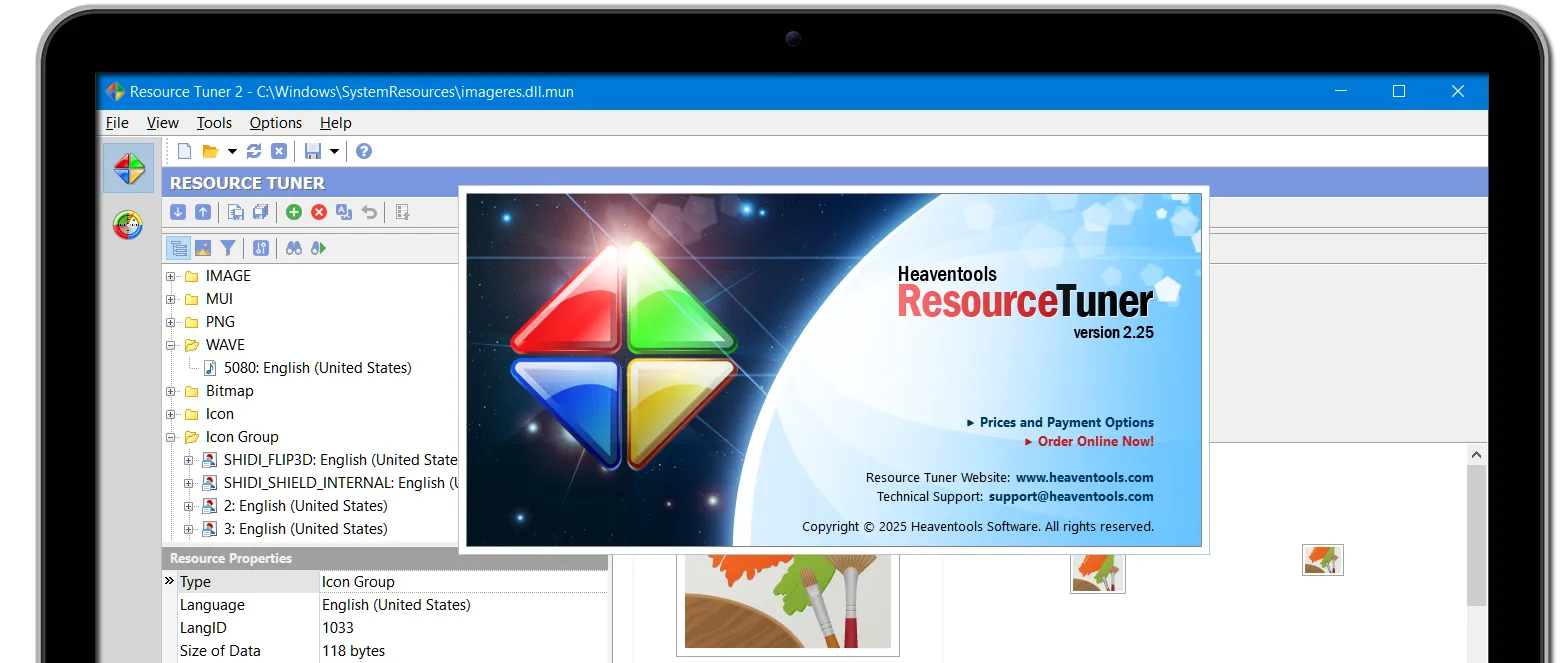
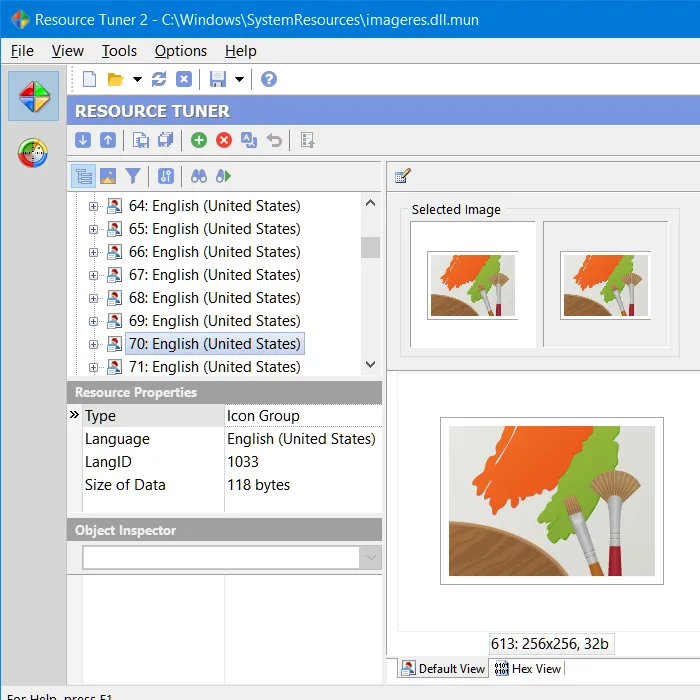
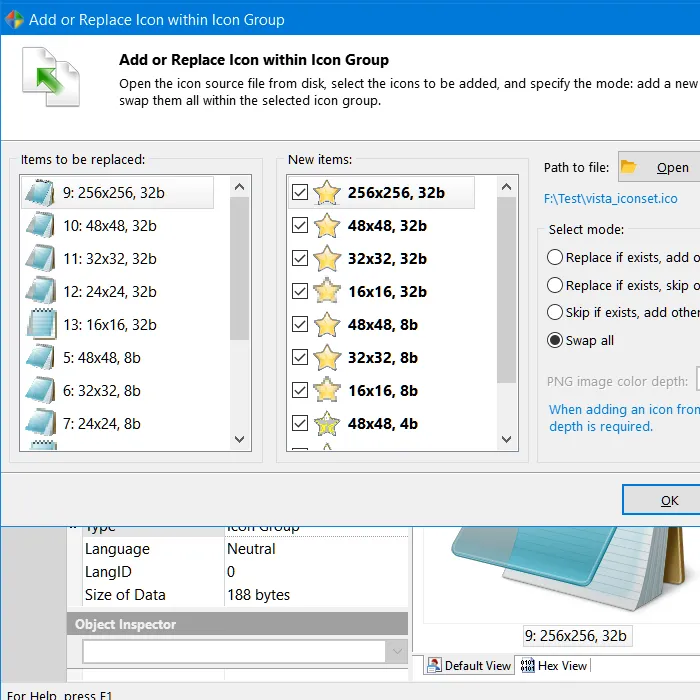
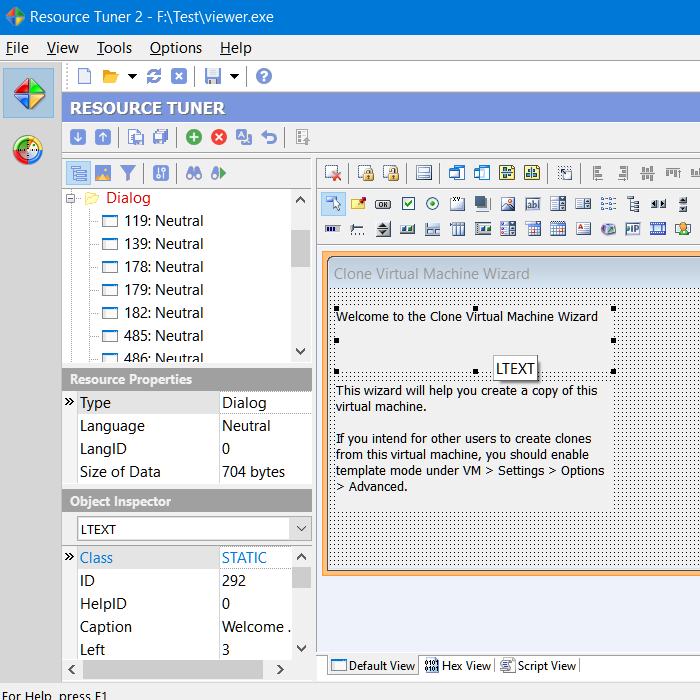
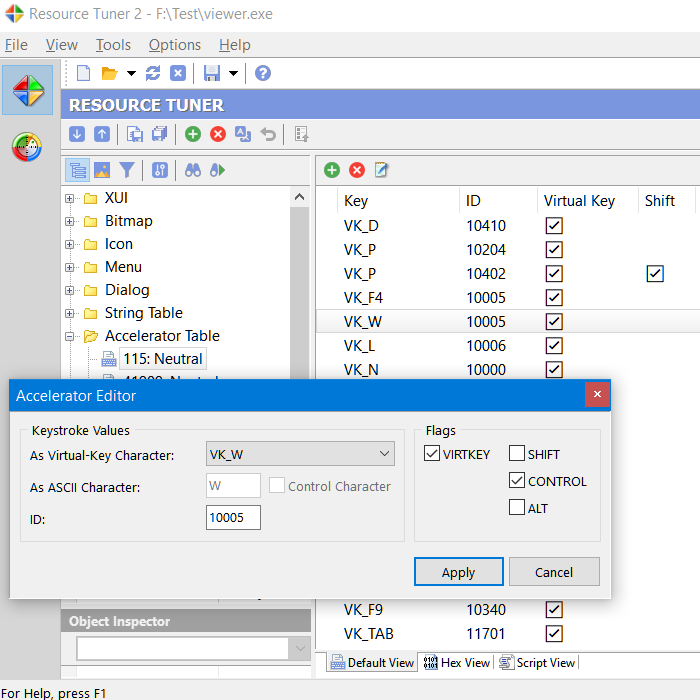
Get yourself one of the most popular Resource Editors out there and tweak your app’s resources, from icons to version data, in just a few clicks.
Resource Tuner — version 2.31 for
Windows 11/10/8/7/XP.

$49.95 per user
The Personal (Home) License allows you to use the program for non-commercial purposes in a non-business, home environment.
One-time payment, no recurring fees.
$89.95 per user
The Business License allows usage of the program in a business, academic, or government environment, applicable to both individuals and companies.
One-time payment, no recurring fees.
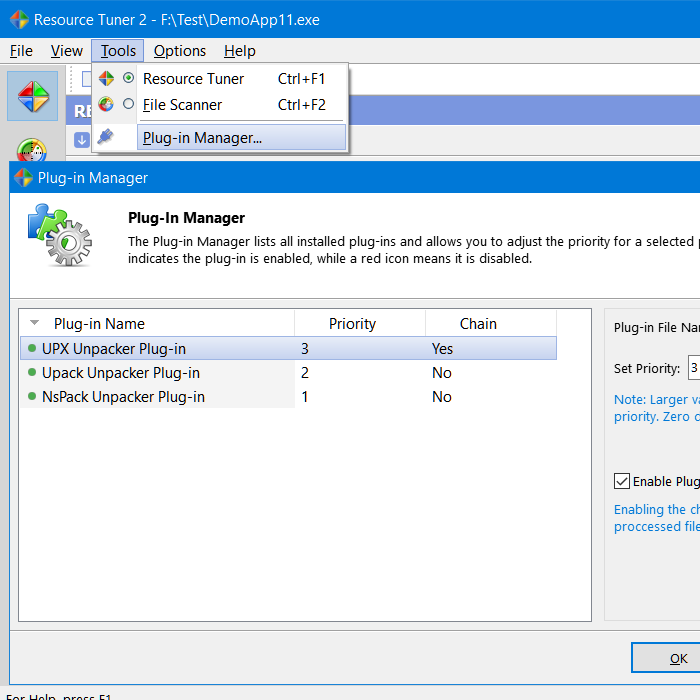
Resource Tuner runs on all versions of Windows, including 11, 10, 8, 7, Vista, and XP, and supports both 32-bit and 64-bit systems.
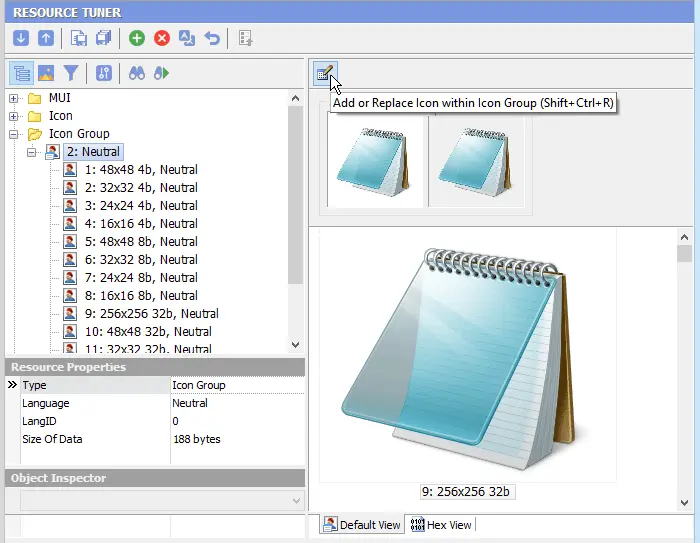
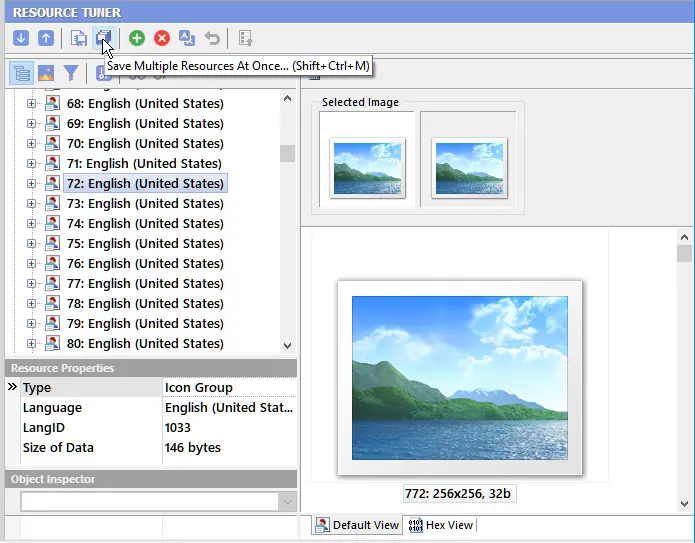
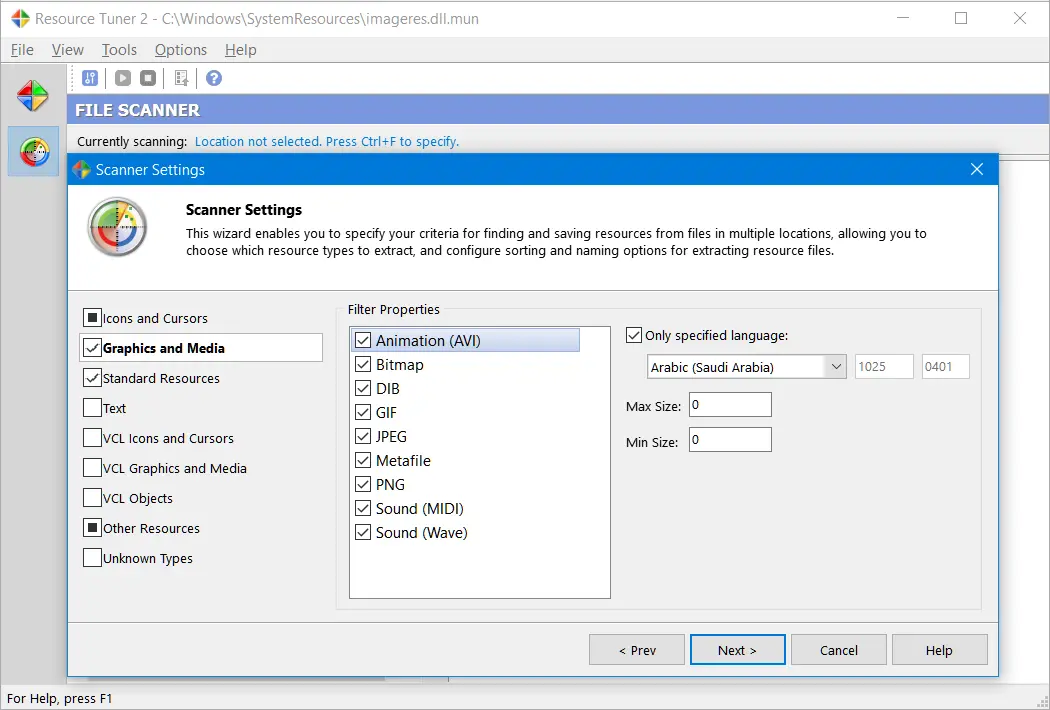
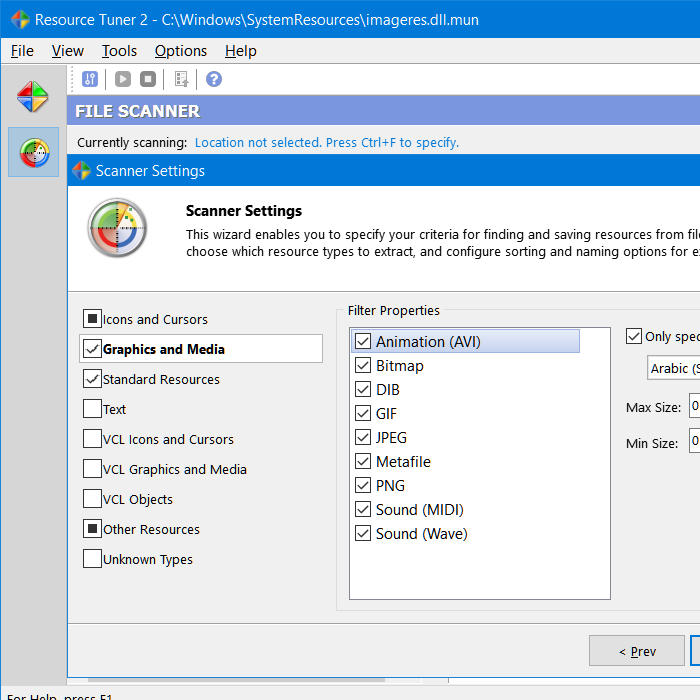
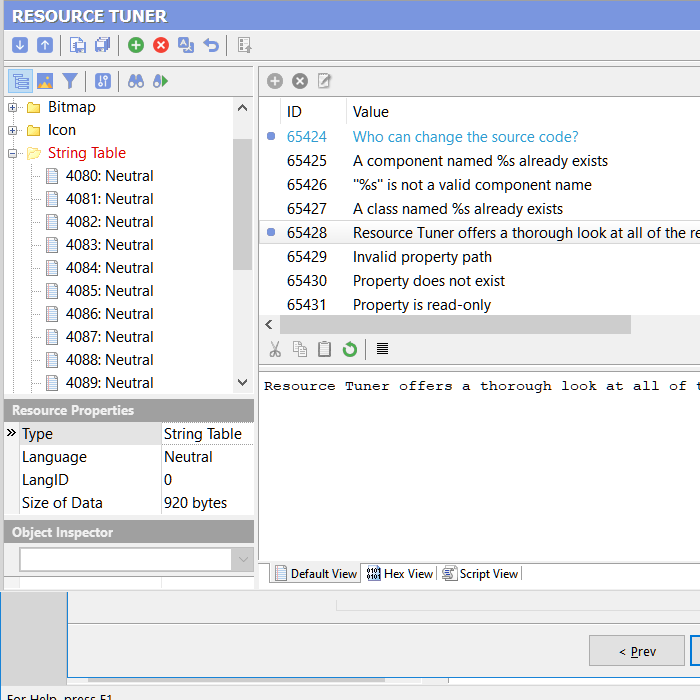
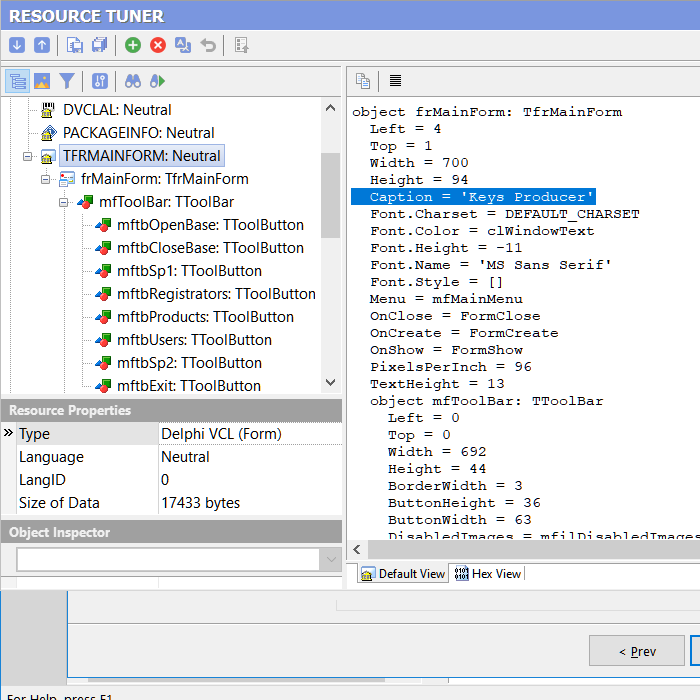
Resource Tuner offers a thorough look at all of the resources (bitmaps, jpeg, icons, strings, dialogs, PNG compressed icons, XML, Image Lists, Type Library, version information) in the compiled executable file, and allows you to make modifications without needing to recompile the source code.
As technology continues to evolve, tube entertainment is likely to undergo significant changes. Some trends that are likely to shape the future of tube entertainment include:
If you're interested in writing about online movie streaming or media content, I'd be glad to help with a different topic.
Running a high-traffic video tube requires a robust technical foundation to ensure seamless playback and site stability.
We are seeing a shift toward "Fast" streaming (Free Ad-Supported Television). Giants like Samsung TV Plus and Roku Channel are legitimizing the "tube" model. It is likely that within 2-3 years, aggregated platforms like Tubexclipscom will either be shut down by domain seizures or will pivot to a legal FAST model.
: Aggregators rely on CDNs to cache video content on servers closest to the user's geographic location. This minimizes buffering and reduces latency.
However, the balance between copyright compliance, user privacy, and open access will remain a defining battleground for the future of the internet. Platforms that can successfully deliver high-quality entertainment while respecting user security and content creator rights will continue to thrive in the competitive digital media marketplace.
When users search for aggregated movie and media platforms, they are typically looking for a centralized hub that bypasses the fragmentation of the modern streaming market. Today, the digital media landscape is highly fractured across dozens of subscription services (Netflix, Disney+, Hulu, Max, etc.). This fragmentation has driven a resurgence in alternative media discovery tools. 1. High-Density Content Indexing
Audiences no longer always have the time or attention span to commit to full-length, two-hour movies. Instead, they look for specific scenes, highlights, or summaries.
Platforms like Netflix, Disney+, and Amazon Prime that host premium, licensed movies and series behind a paywall.
As technology continues to evolve, tube entertainment is likely to undergo significant changes. Some trends that are likely to shape the future of tube entertainment include:
If you're interested in writing about online movie streaming or media content, I'd be glad to help with a different topic.
Running a high-traffic video tube requires a robust technical foundation to ensure seamless playback and site stability.
We are seeing a shift toward "Fast" streaming (Free Ad-Supported Television). Giants like Samsung TV Plus and Roku Channel are legitimizing the "tube" model. It is likely that within 2-3 years, aggregated platforms like Tubexclipscom will either be shut down by domain seizures or will pivot to a legal FAST model.
: Aggregators rely on CDNs to cache video content on servers closest to the user's geographic location. This minimizes buffering and reduces latency.
However, the balance between copyright compliance, user privacy, and open access will remain a defining battleground for the future of the internet. Platforms that can successfully deliver high-quality entertainment while respecting user security and content creator rights will continue to thrive in the competitive digital media marketplace.
When users search for aggregated movie and media platforms, they are typically looking for a centralized hub that bypasses the fragmentation of the modern streaming market. Today, the digital media landscape is highly fractured across dozens of subscription services (Netflix, Disney+, Hulu, Max, etc.). This fragmentation has driven a resurgence in alternative media discovery tools. 1. High-Density Content Indexing
Audiences no longer always have the time or attention span to commit to full-length, two-hour movies. Instead, they look for specific scenes, highlights, or summaries.
Platforms like Netflix, Disney+, and Amazon Prime that host premium, licensed movies and series behind a paywall.